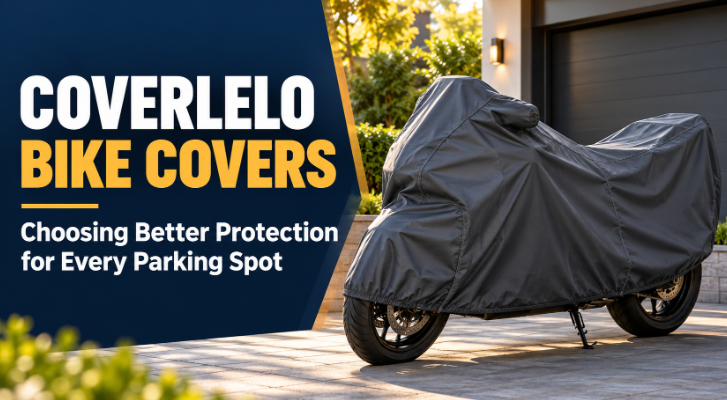
Where you park your motorcycle shapes the care it needs. A quiet garage, an open driveway, and a crowded roadside space expose a bike to different conditions. Dust might be the main concern in one location, while rain, sunlight, or wind demands attention in another. Choosing a cover becomes easier when you start with those everyday surroundings.
Rather than buying by appearance alone, think about how protection will fit into your riding routine. The right size, suitable material, and practical fastenings all matter. This guide explains how to evaluate Coverlelo bike covers for different parking situations and keep your chosen cover working effectively.
Understand What Your Parking Spot Demands
Take a moment to observe where your motorcycle stands for most of the day. Does direct sunlight reach it for several hours? Does water collect nearby after rain? Are trees overhead, or does passing traffic leave a layer of dust? These details help identify the problems a cover should address.
Consider your second parking location as well. A motorcycle may spend nights under shelter but remain outside an office throughout the working day. In that situation, portability matters alongside outdoor suitability. You need something that can travel with you and fit without a lengthy struggle.
Start with the conditions you encounter most often. A clear picture of your surroundings is more useful than choosing the cover with the longest list of advertised features.
Keep Garage Protection Simple and Practical
Indoor parking reduces direct exposure to weather, but it does not eliminate the need for care. Dust can settle during storage, and people moving boxes, tools, or bicycles nearby may brush against your motorcycle. A suitable indoor cover provides a useful barrier against light everyday contact and airborne dirt.
For this setting, manageable weight and a gentle inner surface deserve attention. A bulky outdoor cover may be inconvenient if your main goal is keeping the seat and bodywork clean between rides.
Keep the garage reasonably dry and avoid placing damp fabric over the motorcycle. If the bike will remain unused for an extended period, inspect it occasionally and follow the manufacturer’s storage instructions. A cover supports that routine without replacing it.
Prepare for Open Driveways and Courtyards
An uncovered driveway brings a broader mix of conditions. Morning dew, afternoon sun, sudden showers, and wind may all affect the same parking space. Here, material suitability and secure fastening become especially relevant.
Read weather claims carefully. Water resistant fabric may repel some moisture, but overall rain protection also depends on seams, openings, and construction. Look for specific information rather than assuming that every outdoor cover performs identically.
Check whether the design includes ventilation and how the lower edge is secured. Avoid leaving unnecessary fabric spread across wet ground. If your courtyard offers partial shelter, use it thoughtfully, while considering whether roof runoff could land directly on the motorcycle. Small changes in parking position can complement the protection provided by a cover.
Handle Roadside Dust and Busy Surroundings
Roadside parking often means frequent dust exposure and limited room to work around the motorcycle. A cover that is straightforward to fit can make daily use more realistic, particularly when other vehicles are parked close by.
Before covering the bike, remove loose grit from surfaces where fabric will rest. Dust trapped between the material and paint can cause abrasion when the cover moves. The inner surface needs attention too, especially if the cover has touched the road during removal.
Remember that a cover is not a substitute for a motorcycle lock or a suitable parking location. Keep normal security measures in place. When you remove the fabric, fold it away from dirty pavement where possible and check that any straps remain clear before starting your ride.
Measure the Motorcycle You Actually Park
Correct sizing depends on the complete motorcycle, including the accessories you leave attached. Handlebar width, mirror height, windscreens, luggage racks, and rear boxes can all affect how a cover sits. Two motorcycles of similar length may still need different shapes.
Use the seller’s measurement guidance and check your bike carefully. If you have modified it, describe those changes when asking about compatibility. Engine capacity alone is not a reliable sizing method.
A very tight cover may pull against mirrors or strain stitching. One that is excessively loose can flap in wind and become difficult to secure. Look for enough room to fit comfortably while keeping the lower edge controlled. You should be able to install it without tugging hard around projecting components.
Compare Details Before Placing an Order
When exploring Coverlelo bike covers, connect the product information to your parking requirements. Check the stated dimensions, listed compatibility, fabric description, fastening arrangement, and care guidance. Photographs can suggest how a cover looks, but written details should explain whether it suits your needs.
If an important specification is unclear, ask for clarification before buying. This is particularly helpful when choosing for a motorcycle with a tall windscreen or permanent luggage equipment.
Review delivery and return conditions too. A sizing mistake is easier to manage when you understand the available options beforehand. Compare prices alongside everyday convenience and construction details. An inexpensive cover offers limited value if fitting it is so awkward that you regularly leave it packed away.
Think about storage while comparing options. If you carry the cover to work, check whether the folded fabric will fit in your available luggage space. A supplied bag can help keep it contained, but the cover should be dry before packing. Riders with limited storage may find a manageable folding routine just as valuable as an extra feature they rarely need during everyday use.
Make Wind Control Part of the Decision
Wind can lift the lower edge of a cover or make loose sections move repeatedly against the motorcycle. A suitable fit helps, while an elastic hem and securing strap can provide additional restraint where the design includes them.
Check that fastenings are accessible in your usual parking space. A buckle that is difficult to reach may become frustrating when you cover the bike every evening. Secure everything according to the instructions without tightening straps enough to distort the fabric.
After windy weather, inspect the cover’s position and look for wear around contact points. For severe conditions, seek sheltered parking when available. Even a carefully secured cover has practical limits, and exposure varies considerably between enclosed courtyards and open roadside spaces.
Cover a Cool and Clean Motorcycle
A consistent covering routine protects both the bike and the fabric. After riding, allow hot engine and exhaust components to cool, following the relevant instructions. Do not assume that ordinary material can safely touch hot parts simply because it is intended for motorcycles.
Check for leaves, grit, and other debris before installation. Ease the cover over mirrors and handlebars rather than forcing it across them. Position the lower edge, then attach any supplied straps.
Whenever practical, let wet surfaces dry first. If you need to cover the motorcycle while damp, check underneath later when conditions improve. Ventilation can help moisture escape, but it does not remove the need to inspect a bike that remains covered for days.
See also: Why the Baltic States Are Becoming Attractive for Small Businesses
Keep Protection Ready for the Next Ride
Clean your cover according to its instructions and let it dry before packing it away. Check stitching, elastic, and buckles periodically. Store the fabric somewhere accessible so covering the motorcycle remains an easy habit rather than an additional chore.
Ultimately, choosing among Coverlelo bike covers starts with knowing your parking spot and ends with sensible daily use. Match the size to your motorcycle, assess materials against your surroundings, and pay attention to moisture and movement. A thoughtful choice helps reduce cleaning work and gives your parked bike a practical layer of everyday protection wherever your routine takes you.