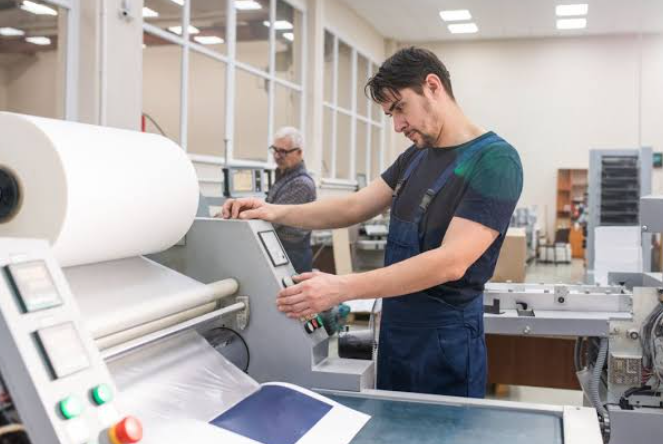
High-volume printing requires a careful balance between speed, efficiency, and quality. Manufacturers need to produce large quantities of material while ensuring that the finished output remains consistent from the beginning of a production run to the end.
This becomes increasingly challenging when printing lines operate continuously. A small variation in print quality can affect a large quantity of material if it is not identified quickly. Manual sampling can provide useful quality information, but it may not offer continuous visibility across an entire production run.
Automated inspection provides manufacturers with another way to monitor production. By using cameras and specialized software, the printing process can be observed continuously, allowing potential quality problems to be identified while production is still underway.
Why Complete Print Monitoring Matters
Printed materials often contain detailed graphics, text, colors, and patterns. These elements need to remain consistent to meet customer expectations and production standards.
A problem can appear at almost any point during production. It might begin after a routine quality check has already been completed, meaning the issue could continue until another sample is inspected.
Continuous monitoring helps reduce this gap by observing material throughout the production process.
Instead of checking only selected sections, manufacturers can gain greater visibility into the complete output.
The Challenge of High-Speed Printing
High-speed printing equipment can produce significant quantities of material within a short period.
When a web moves rapidly, it is difficult for an operator to examine every section visually. Human inspection also becomes challenging during long production shifts because continuous concentration is difficult to maintain.
Automated imaging can handle repetitive observation while operators focus on interpreting alerts and managing production conditions.
This creates a practical combination of technology and human expertise.
How Automated Print Monitoring Works
A typical automated inspection setup uses cameras positioned along the production line.
As the material passes through the inspection area, cameras capture images continuously. Software then analyzes those images and compares the production against a reference or predefined inspection criteria.
If the system identifies a significant difference, it can generate an alert.
The general process includes:
- Printed material moves through the inspection area.
- Cameras capture images continuously.
- Lighting provides consistent illumination.
- Software analyzes the captured images.
- Potential defects are identified.
- Operators receive relevant alerts.
- Production personnel investigate and respond.
The exact process can vary depending on the printing technology and production environment.
Types of Print Problems
A wide range of visual problems can affect printed materials.
Missing Elements
Text, graphics, or other printed components may be incomplete or absent.
Registration Errors
Multicolor printing depends on accurate alignment. Differences between printing layers can affect the final appearance.
Spots and Streaks
Unwanted marks can occur because of ink-related problems, contamination, equipment conditions, or material handling.
Smudging
Unwanted spreading or smearing can reduce print clarity and overall visual quality.
Color Variation
Changes in printing conditions can create differences in color compared with an approved standard.
The inspection process should be configured around the defects that are most important for the specific product.
Benefits of Continuous Inspection
Continuous automated monitoring can provide several advantages for manufacturers.
Earlier Problem Identification
Potential defects can become visible closer to the point where they occur.
Reduced Waste
When production problems are identified sooner, manufacturers may have an opportunity to limit the amount of affected material.
Greater Consistency
Continuous monitoring provides a broader view of production than occasional sampling.
Improved Production Visibility
Inspection results can give operators and quality teams more information about what is happening on the production line.
Better Use of Operator Time
Instead of watching every section of a rapidly moving web, operators can focus their attention on relevant alerts and production decisions.
Reducing the Risk of Escaped Defects
A defect that is not detected during production can move into later processing stages or eventually reach the customer.
This can create additional costs because the manufacturer may need to inspect, rework, replace, or discard affected products.
Continuous inspection can help reduce this risk by providing earlier information about potential problems.
It does not guarantee that every defect will be prevented, but it can strengthen the overall quality-control process.
The Importance of Reliable Imaging
The effectiveness of automated inspection depends heavily on image quality.
Cameras need to capture clear and consistent images while material is moving. The imaging setup must therefore be appropriate for production speed and the characteristics of the material.
Camera placement, viewing area, and image resolution should all be considered during system design.
A reliable inspection process begins with reliable visual information.
Lighting Conditions
Lighting is another important part of the inspection environment.
Uneven lighting, glare, or reflections can make a printed surface appear different to the camera. This can make automated analysis more difficult.
Manufacturers should therefore design lighting conditions carefully according to the material and inspection requirements.
Stable illumination can help the system distinguish actual defects from changes caused by the inspection environment.
Using Reference Standards
A clear quality reference helps automated inspection determine what acceptable production should look like.
For repeated printing jobs, an approved reference can provide a useful comparison point. The system can evaluate current production against that standard and identify relevant differences.
Inspection tolerances should be configured carefully. Excessively sensitive settings can generate unnecessary alerts, while settings that are too relaxed may overlook important variations.
Integrating Inspection With Production
An automated inspection solution should fit naturally into the production workflow.
Physical integration requires consideration of available space, material movement, operator access, and maintenance requirements.
The software should also provide information in a form that operators can understand quickly.
Manufacturers can explore 100% printing inspection systems when evaluating ways to strengthen continuous monitoring and quality control.
Turning Inspection Results Into Improvements
Inspection information can become useful production data.
When defects are recorded over time, manufacturers may identify recurring patterns. A particular problem could occur more often under certain production conditions or with a particular material.
Quality teams can investigate these patterns to determine possible causes.
This approach supports continuous improvement because it focuses not only on finding defective material but also on understanding why defects occur.
Combining Automation With Human Expertise
Automated inspection is most effective when it works alongside skilled operators.
The system can perform continuous monitoring and highlight potential issues, while operators investigate the cause and decide what action should be taken.
Human judgment is especially important when evaluating whether a variation is acceptable according to product requirements.
This combination allows technology to handle repetitive monitoring while people remain responsible for critical production decisions.
Maintenance and System Reliability
Regular maintenance is essential for consistent inspection performance.
Cameras should remain correctly positioned, lighting should remain stable, and software settings should be reviewed when production requirements change.
Changes to product designs, materials, or printing conditions may require updated inspection parameters.
Operator training is also important. Staff should understand how to interpret alerts and respond appropriately.
Supporting Efficient Production
Quality control should support productivity rather than unnecessarily interrupt it.
A well-designed automated inspection process can help manufacturers identify problems while production is running, allowing them to investigate issues before they become more widespread.
This can contribute to a more efficient production workflow and reduce the amount of time spent discovering defects after the production stage has already been completed.
Applications Across the Printing Industry
Continuous inspection can be useful in many printing applications.
Packaging, labels, flexible materials, and other printed products may require consistent monitoring because appearance and accuracy are important to their final use.
The specific inspection requirements depend on the material, printing process, and customer expectations.
For this reason, manufacturers should design inspection strategies around their individual production requirements.
Frequently Asked Questions
1. Why is continuous monitoring useful in high-volume printing?
It provides greater visibility throughout production and can help identify potential problems earlier than periodic sampling alone.
2. Can automated inspection reduce printing waste?
It can help reduce waste by making production problems visible sooner, giving operators an opportunity to investigate and correct issues before more material is affected.
3. Does continuous inspection replace manual quality control?
No. Automated inspection can complement manual quality control. Machines provide continuous monitoring, while experienced operators interpret results and make production decisions.
Conclusion
Maintaining consistent quality across high-volume print production requires reliable monitoring and timely responses to production problems. As printing speeds increase, continuous manual inspection becomes increasingly difficult.
Automated inspection provides a practical way to observe printed material throughout production. Cameras, lighting, and image-processing software can work together to identify potential differences and provide useful information to operators.
When properly implemented, this approach can support earlier defect detection, reduce potential waste, improve consistency, and strengthen overall quality control.
The most effective results come from combining appropriate inspection technology with clear quality standards, regular maintenance, and skilled human oversight. This creates a more reliable production environment where quality and efficiency can work together.